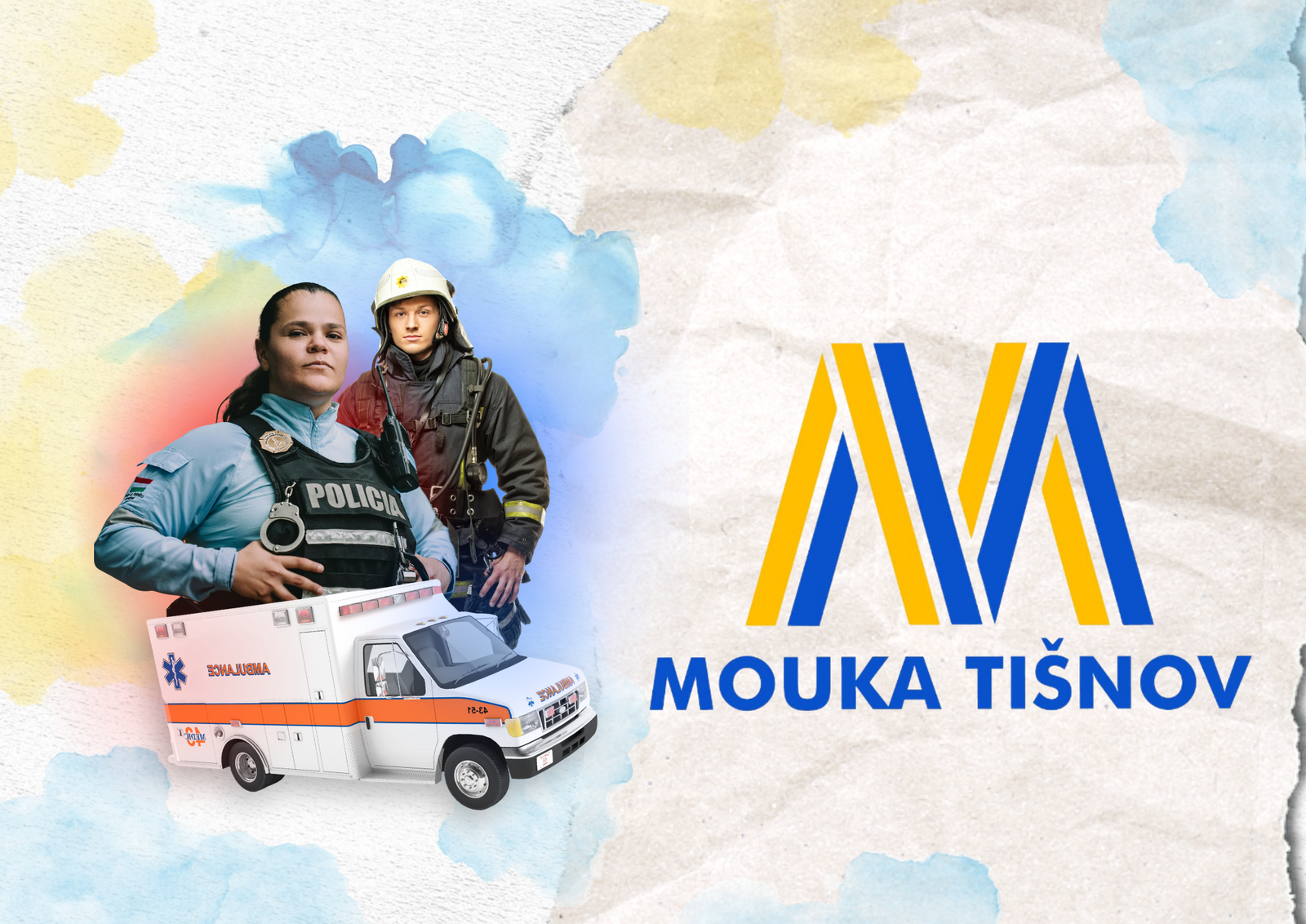
Technical straps for firefighters, police and rescue teams: The safety that holds critical moments together
When people think of a rescue operation, most imagine sirens wailing, fast deployments, protective suits, and the tension in professionals’ eyes. But few realize that behind these scenes stands something as technically inconspicuous as webbing straps. And these specialized textile components often determine stability, safety, and the success of the mission. Without reliable straps, rescue operations would lose their foundation.
What are straps used for in rescue services?
Within rescue services, webbing is primarily used for:
securing equipment and tools,
stabilizing objects and people,
anchoring structures or evacuated persons,
improving the handling of tools or injured individuals,
fastening stretchers, bags, and technical gear to vehicles or helicopters.
In situations where every second counts, maximum reliability is a must. It’s not just a tool – it’s a safeguard that can mean the difference between safety and danger.
Firefighters: Straps put to the test by fire
For firefighters, webbing is indispensable for example when:
stabilizing crashed vehicles (especially during extrication),
securing rescue barriers or inflatable cushions,
lifting roof elements and debris with hoisting systems,
handling loads and equipment during fires in hard-to-reach terrain.
They are also used for rappelling from tall buildings, rescuing people from water, and securing ladders or platforms. Every strap must withstand extreme conditions – high humidity and temperature fluctuations.
Rescue teams: fixation and transport in demanding terrain
Emergency medical services use webbing:
to secure patients to stretchers and vacuum mattresses,
to immobilize limbs in case of fractures or serious injuries,
to fasten medical equipment during helicopter or ambulance transport,
for quick and hygienic patient transfers from confined spaces (e.g. elevator shafts, mass accidents),
to secure defibrillators, infusion pumps, and monitors during transport.
Equally important are their hypoallergenic properties, easy washability, and resistance to biological material. Straps made from biocompatible materials are increasingly used, as they can withstand dozens of decontamination cycles.
Police: protection, control, and coordination
For the police, webbing is used for example:
in special unit gear (for window access, rooftop deployment, fast vertical movement),
to secure traffic closures and evacuations,
as part of extrication tools in cooperation with firefighters,
to attach tactical vests, protective gear, weapons, and shields,
in restraint or control systems during operations involving dangerous offenders.
Here, straps must adapt to demanding physical stress, frequent bending, night-time handling, and use with heavy equipment.
Quality and testing: No compromises
Modern webbing today not only meet European standards (e.g. EN 354, EN 358, EN 361, and EN 362) but often exceed them thanks to:
advanced design with reinforced stitching,
the use of materials like aramid, Technora, or UHMWPE,
testing methods under extreme conditions (UV radiation, heat, humidity, cyclic stress),
resistance to cuts, punctures, and chemicals.
In our company, we closely follow technological progress and test the strength of components used in systems deployed under the toughest conditions. Details can be found at www.mouka.co.uk/technology
Studies and field experience
A study published on Firehouse.com notes that worn webbing straps failed at only 56% of their original strength during testing. This only reinforces how essential it is to regularly inspect every piece of equipment and choose materials with proven durability and longevity.
At our company, we emphasize rigorous testing of every strap batch. We focus especially on tensile strength to ensure maximum safety in real-life situations. Our webbing undergoes stress testing that simulates real operational loads. Our priority is to make sure that the strap is never the weak link in our customers’ final products.