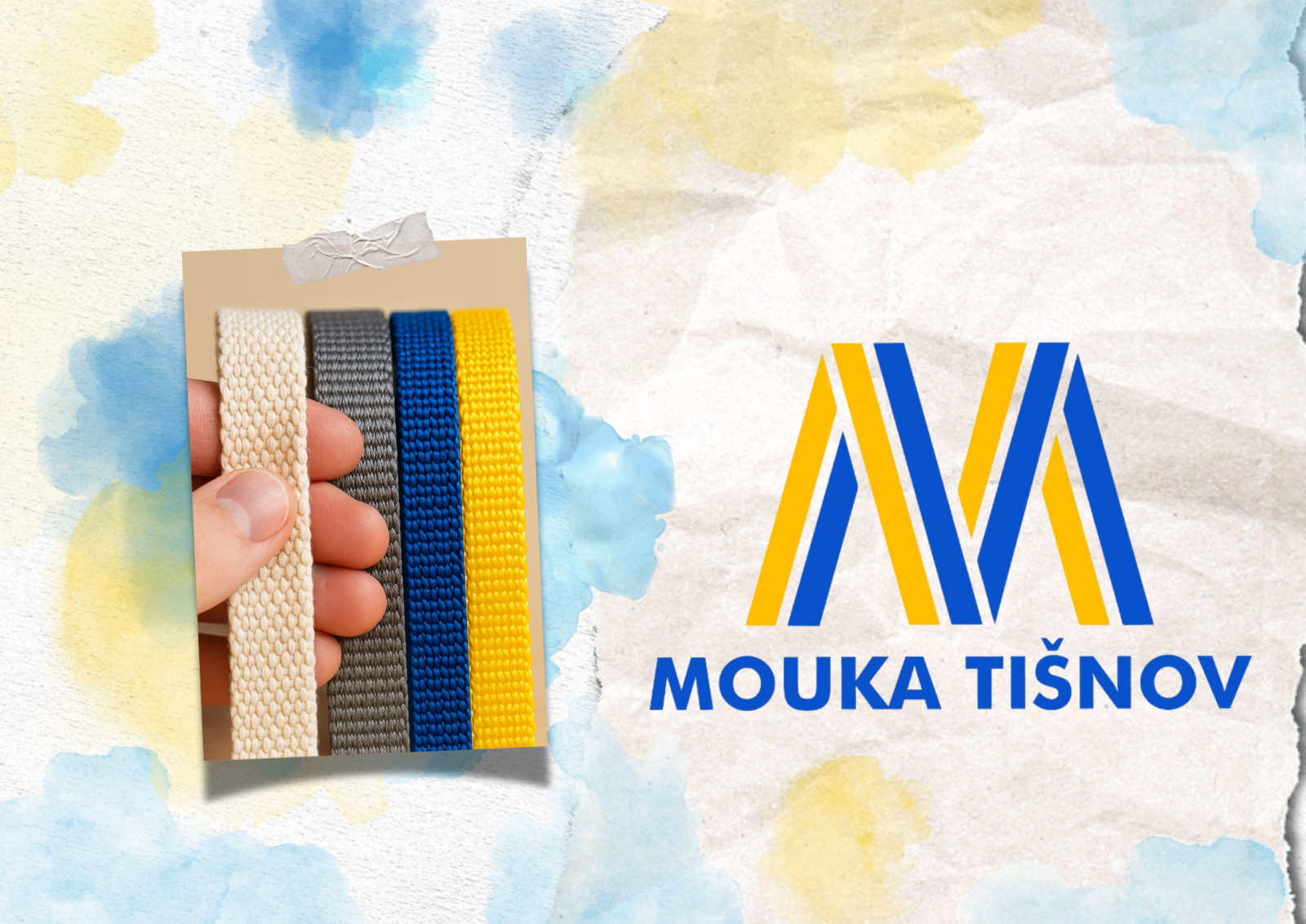
Webbing materials: How to choose the right type?
Choosing the right webbing starts with selecting the right material. Each fiber type offers different properties – some require extreme strength, others flexibility, moisture resistance, or a natural appearance. At Mouka Tišnov, we offer a wide portfolio of webbing materials to suit every need – from decorative use and outdoor gear to industrial and technical applications.
Explore our full webbing catalog here.
Get to know the materials and discover which webbing is best suited for your specific project.
Cotton webbing: eco-friendly with a natural look
Cotton is a natural fiber known for its softness, comfort, and aesthetic appeal. Cotton webbing straps are soft to the touch, breathable, and environmentally friendly.
Advantages: natural composition, breathability, biodegradable
Disadvantages: lower resistance to water and UV radiation
Uses: decoration, fashion accessories, furniture, packaging projects
Cotton webbing straps are ideal for eco-conscious, decorative, and natural-looking projects where both aesthetics and sustainability matter.
Cotton elastic webbing: flexible and comfortable
Combining cotton with elastic results in a stretchable webbing that maintains the comfort of natural fibers.
Advantages: elasticity, comfort, natural appearance
Disadvantages: lower mechanical strength under heavy loads
Uses: medical straps, sports webbing, athletic accessories
These elastic webbings are perfect for applications requiring flexibility and skin contact – such as healthcare products or sports gear.
Polyamide webbing (nylon): maximum durability
Polyamide (nylon) webbing is known for its high tensile strength, abrasion resistance, and long service life.
Advantages: high strength, excellent abrasion resistance
Disadvantages: reduced strength when wet
Uses: webbing straps for climbing, fall protection, safety harness systems
Nylon webbing is ideal for high-risk applications where safety and durability are top priorities, such as industrial work-at-height or rescue equipment.
Polyester webbing: best for outdoor use
Polyester webbing offers excellent dimensional stability, low stretch, and resistance to UV rays and water.
Advantages: UV resistance, water resistance, shape retention
Disadvantages: less elasticity than nylon
Uses: tie-down straps, sporting equipment, outdoor applications
Polyester webbing is perfect for long-term outdoor use – such as for tents, tarps, or backpacks.
Polyester-cotton webbing: strength meets style
This blend of polyester and cotton combines the durability of synthetic fibers with the pleasant texture of natural ones.
Advantages: balanced durability and natural feel
Disadvantages: trade-off between strength and comfort
Uses: fashion accessories, packaging, bags and backpacks
Ideal for when you need both performance and visual appeal – like in designer bags or stylish packaging.
Polypropylene webbing: lightweight and versatile
Polypropylene webbing is lightweight, cost-effective, and water-resistant, suitable for a wide range of uses.
Advantages: low weight, chemical resistance, floats on water
Disadvantages: lower UV resistance
Uses: packaging industry, automotive, bags
Polypropylene is an ideal choice for indoor and short-term outdoor use, especially where weight and price are key factors.
Elastic polypropylene webbing: flexible and water-resistant
Blending polypropylene with elastic creates a webbing that is both stretchable and water-resistant.
Advantages: elasticity, low weight, water resistance
Disadvantages: limited mechanical strength
Uses: sports gear, backpacks, pet accessories
These flexible webbings are great for lightweight strapping systems and accessories that require both stretch and moisture resistance.
Blended webbing: polypropylene with polyester
A blend of polypropylene and polyester increases strength and UV resistance compared to standard PP webbing.
Advantages: greater strength, improved UV resistance
Disadvantages: higher cost
Uses: technical multipurpose webbing, outdoor use
This blend is perfect for demanding outdoor environments requiring durability and longevity.
Reflective polypropylene webbing: visibility in all conditions
Polypropylene webbing with a reflective layer increases safety and visibility in darkness and low-light conditions.
Advantages: enhanced safety, reflective properties
Disadvantages: reflective layer may wear over time
Uses: workwear, sports gear, safety equipment
Reflective webbing is essential where visibility is critical – such as on work jackets or high-visibility backpacks.
Jute webbing: natural and rustic
Jute webbing offers an eco-friendly alternative with a natural, rustic look.
Advantages: natural origin, biodegradable
Disadvantages: lower moisture and mechanical resistance
Uses: decorations, eco-products, gardening
Jute is ideal for decorative and sustainable projects where strength isn’t the primary concern.
Dyneema® webbing: ultimate strength, minimum weight
Dyneema® is a high-performance material that’s up to 15× stronger than steel by weight, with ultra-light properties.
Advantages: extreme strength, ultra-lightweight, excellent water resistance
Disadvantages: high cost, requires UV protection
Uses: climbing slings, military gear, racing sailboats
Dyneema® webbing is perfect for extreme conditions where every gram and every ounce of strength counts.
Custom materials for special applications
Beyond our standard range, Mouka Tišnov also offers customized webbing solutions made from advanced high-tech materials, including:
Twaron® – para-aramid fiber with high strength and heat resistance
Kevlar® – ultra-strong aramid fiber used in bulletproof vests
Nomex® – flame- and heat-resistant fiber
Vectran® – liquid crystal polymer with excellent strength and chemical resistance
Technora® – para-aramid with high strength, heat and chemical resistance, low stretch, and moderate UV resistance
The right material always depends on the intended application, required properties, and budget. We're happy to help you find the ideal custom solution for your specific needs.
How to choose the right webbing?
Choosing the right webbing depends on the environment, load requirements, aesthetics, and budget.
At Mouka Tišnov, we’ll help you select the ideal webbing material and type based on your exact needs.
Don’t hesitate to contact us—whether you need webbing for sports, safety, gardening, or industrial use, we’re ready to provide expert advice and top-quality solutions tailored to your project.